
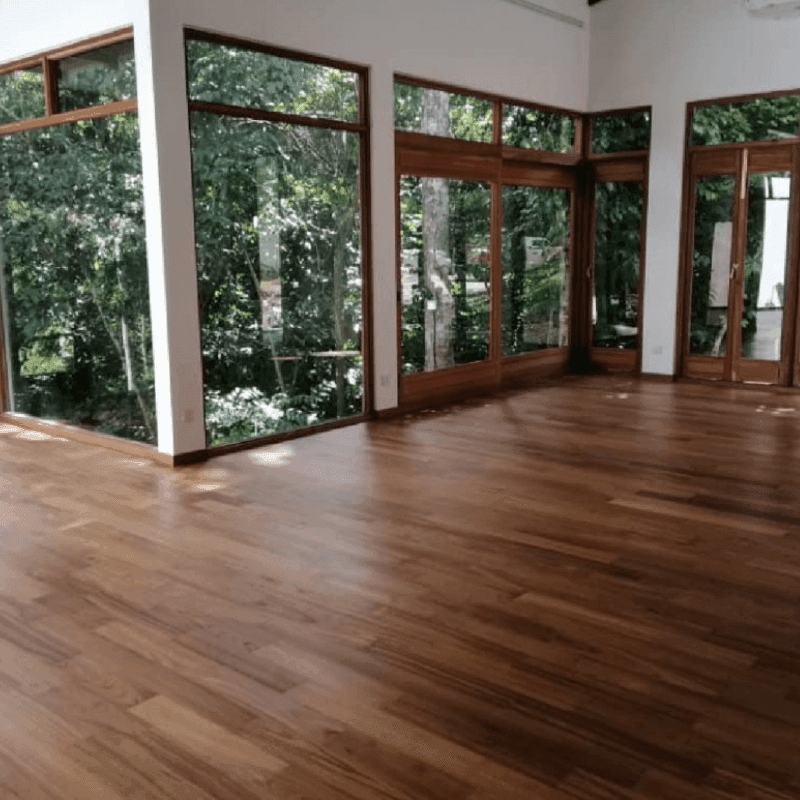
Burmese teak flooring is an excellent option for homeowners, interior designers and architects who appreciate natural timber, warm golden-brown tones and timeless interior design. Known for its attractive grain, natural oils and durability, Burmese teak is a popular hardwood choice for creating elegant residential and commercial interiors.
Whether you are renovating a landed property, upgrading a condominium or specifying materials for a new development, choosing the right timber flooring can significantly influence the appearance and atmosphere of a space.
In Malaysia, where humidity and temperature changes are important considerations for natural wood flooring, selecting suitable timber and ensuring proper installation are essential for long-term performance.
At Asia Timber House (ATH), Burmese Teak is available as part of our solid timber hardwood flooring collection. This guide explores its characteristics, benefits, flooring styles, maintenance requirements and the factors to consider before choosing Burmese teak flooring for your property.
What Is Burmese Teak Flooring?
Burmese teak flooring is natural timber flooring made from teak wood originating from Myanmar, historically known as Burma. Teak is scientifically known as Tectona grandis and is valued for its distinctive appearance, workability and natural durability.
Burmese teak typically features attractive grain patterns with colours ranging from light golden brown to richer golden-brown tones. Depending on the timber, grade and finish, the floor may display subtle variations that give each board its own character.
Teak also contains natural oils that contribute to its characteristic feel and properties. Its combination of appearance and durability has made it a recognised timber for applications such as flooring, furniture, doors, window frames and other interior finishes.
At Asia Timber House, Burmese Teak is listed as a tropical hardwood with Grade A & Up under the Malaysia Grading Rules. ATH also lists its density as 610–750 kg/m³ and its resistance to fungus and pests as high.
These characteristics make Burmese teak flooring worth considering for projects that require a natural timber finish with an elegant, warm appearance.
Benefits of Burmese Teak Flooring
1. Beautiful Golden-Brown Colour
One of the main attractions of Burmese teak flooring is its natural colour.
The timber ranges from light golden brown to richer golden-brown shades, creating a warm and inviting atmosphere without relying on artificial wood-grain patterns.
Its colour can complement a wide range of interior palettes, including white walls, beige furnishings, neutral fabrics and darker timber accents.
For homeowners who prefer a natural and understated aesthetic, Burmese teak offers a balance between visual warmth and timeless appeal.
2. Distinctive Natural Wood Grain
Every piece of natural timber has its own grain characteristics and colour variation.
Burmese teak can feature straight, wavy or slightly interlocked grain, contributing to its individual appearance. These variations help create a natural floor surface that differs from manufactured materials designed to imitate wood.
The final appearance will depend on the timber grade, board dimensions, finishing method and installation pattern.
For a consistent design, it is advisable to review actual timber samples and, where possible, a representative selection of boards before confirming the flooring specification.
3. Natural Durability
Burmese teak is recognised for its natural durability. ATH lists its resistance to fungus and pests as high.
This makes it a timber species worth considering for flooring projects where material durability is an important selection criterion.
However, natural durability does not mean that teak flooring is maintenance-free or immune to all forms of damage. Moisture exposure, installation quality, surface wear and general care will still influence its service life.
Choosing properly prepared timber and following suitable installation and maintenance practices can help preserve the floor’s appearance and condition.
4. Suitable for Different Interior Styles
Burmese teak flooring works with a variety of interior design approaches.
In modern homes, its golden-brown colour can soften minimalist spaces and complement clean architectural lines. In traditional interiors, it can work alongside timber furniture, decorative joinery and warmer colour palettes.
It can also be used in contemporary commercial interiors where natural materials help create a welcoming and professional atmosphere.
Because teak has a distinctive natural appearance, it can serve as either a subtle foundation for the rest of the interior or a prominent design feature.
5. A Natural Material for Long-Term Interior Design
Timber flooring can be an important part of a property’s overall design.
Burmese teak can be coordinated with timber doors, staircase components, furniture and other interior finishes to create a consistent material palette.
With appropriate care, natural timber flooring can remain an attractive feature for many years. The exact lifespan and potential for refinishing depend on the product’s construction, thickness, surface finish and maintenance history.
When selecting flooring, consider not only its initial appearance but also how it will fit your interior design and maintenance expectations over time.
Is Burmese Teak Flooring Suitable for Malaysian Homes?
Burmese teak flooring can be suitable for Malaysian homes when the timber is properly prepared and installed according to the property’s conditions.
Malaysia’s tropical climate brings high humidity, frequent rainfall and temperature changes between air-conditioned and non-air-conditioned environments. These conditions can affect natural timber, making moisture management an important part of any wood flooring project.
Before installing Burmese teak flooring, consider the following factors.
Proper Timber Drying
Timber moisture content plays an important role in flooring stability.
Wood that has not been adequately dried may shrink, expand or deform as it adjusts to its surrounding environment.
Ask your flooring supplier about the timber’s moisture content, drying process and suitability for the intended installation conditions.
Subfloor Preparation
The subfloor should be inspected before installation.
An uneven or excessively damp subfloor can contribute to flooring movement, gaps and other problems. Any moisture issues should be identified and addressed before the timber is installed.
The correct subfloor preparation method depends on the flooring system and the conditions at the property.
Acclimatisation and Installation
The flooring contractor should follow the product manufacturer’s recommendations regarding acclimatisation, moisture testing, installation method and expansion allowances.
This is particularly important when installing natural timber in rooms with air-conditioning or where indoor humidity may fluctuate.
Moisture Management
Avoid allowing water to remain on timber flooring for extended periods. Address plumbing leaks, dampness and other sources of moisture promptly.
Although Burmese teak is known for its natural durability, it should not be treated as waterproof flooring.
With proper preparation and installation, Burmese teak can be considered for suitable indoor flooring applications in Malaysia.
Burmese Teak Flooring Options at Asia Timber House
Different flooring profiles can produce different visual effects and installation requirements.
ATH lists Burmese Teak in its solid timber hardwood flooring collection, including the following options.
1. Burmese Teak Tongue-and-Groove Flooring
ATH lists Burmese Teak tongue-and-groove (T&G) flooring in the following dimensions:
Thickness: 17 mm
Width: 120 mm
Length: Random lengths
Tongue-and-groove flooring uses interlocking edges to help align adjoining boards during installation. It is a popular profile for creating a continuous timber floor with a traditional plank appearance.
The relatively wide board format can help create a balanced look across larger rooms, although the final effect will depend on the room dimensions and installation layout.
Confirm the installation system and subfloor requirements with your flooring supplier before proceeding.
2. Burmese Teak Slim Flooring
ATH also lists a Burmese Teak slim flooring option with the following dimensions:
Thickness: 10 mm
Width: 50 mm
Length: Random lengths
This narrower profile can create a more detailed floor pattern than wider timber planks.
Because the slim flooring differs in thickness and dimensions from the T&G product, its installation method and suitability for a particular subfloor should be confirmed separately.
The two products should not be assumed to have identical installation requirements.
3. Coordinated Burmese Teak Staircase Finishes
For projects that incorporate timber flooring and staircases, ATH also lists Burmese Teak stair boards.
Using complementary timber finishes across floors and stairs can help create visual continuity in double-storey homes, duplexes and other multi-level properties.
ATH lists Burmese Teak solid step boards measuring 35 mm thick by 300 mm wide, as well as an Eco Step option measuring 35 mm thick.
Actual availability, dimensions and suitability should be confirmed with ATH before specifying the product.
Explore the ATH stair board collection for more information.
Burmese Teak Flooring vs Other Timber Flooring Options
Burmese teak is one of several timber species available for flooring. The best option depends on your preferred appearance, practical requirements and project budget.
Burmese Teak vs Burmese Walnut
Burmese teak typically features light golden-brown to rich golden-brown tones, while Burmese Walnut ranges from light brown to darker brown with distinctive grain patterns.
Choose Burmese teak if you prefer a warmer golden appearance. Burmese Walnut may be more suitable if you want a deeper brown palette.
Both options can complement contemporary and classic interiors, but the actual appearance will vary according to the timber grade and finish.
Burmese Teak vs Merbau
Burmese teak is generally associated with golden-brown tones, while Merbau typically ranges from brown to dark reddish brown.
Merbau may appeal to homeowners who prefer a deeper, more reddish timber colour. Burmese teak is worth considering when a lighter golden-brown appearance is preferred.
Compare the available specifications, board dimensions and finishes before making a decision.
Which Timber Flooring Should You Choose?
There is no single timber species that suits every property.
Consider the following factors when comparing your options:
Preferred timber colour and grain
Natural durability and product specifications
Flooring thickness and board dimensions
Installation method and subfloor conditions
Maintenance requirements
Overall project budget
Coordination with furniture, doors and staircase finishes
For a broader comparison of timber flooring options, read ATH’s guide to the best wood species for flooring in Malaysia.
How to Maintain Burmese Teak Flooring
Regular maintenance helps keep Burmese teak flooring clean and attractive.
Although teak is known for its natural durability, its surface finish can still be affected by dust, grit, moisture and everyday wear.
1. Sweep or Vacuum Regularly
Remove dust and abrasive particles using a soft broom or a vacuum cleaner suitable for timber flooring.
Grit can scratch the surface when repeatedly walked across or dragged along the floor.
2. Clean Up Spills Promptly
Wipe up water and other spills as soon as possible.
Avoid allowing liquids to accumulate around joints or remain on the timber surface for extended periods.
3. Avoid Excessive Water
Do not flood the floor or use an excessively wet mop.
Use a cleaning method and products suitable for the flooring’s finish, following the supplier’s maintenance recommendations.
4. Protect Against Scratches
Place protective pads beneath furniture legs and take care when moving heavy items.
Entrance mats can help reduce the amount of dirt and grit brought into the property. Rugs can also protect areas with heavier foot traffic
5. Maintain the Surface Finish
The appropriate maintenance routine depends on whether the flooring has an oil-based, lacquered or other protective finish.
Use compatible cleaning products and avoid abrasive chemicals or treatments that have not been recommended for the specific flooring system.
If refinishing becomes necessary, consult a qualified flooring professional to determine whether the product can be sanded or recoated and what preparation is required.
Where Can You Use Burmese Teak Flooring?
Burmese teak flooring can be considered for a range of indoor residential and commercial applications.
Living rooms: Its golden-brown tones provide a warm foundation for sofas, timber furniture and contemporary interior finishes.
Bedrooms: Natural teak flooring can help create a comfortable and visually cohesive private space.
Dining areas: The natural grain can complement timber dining tables, neutral walls and a variety of furniture styles.
Home offices: Burmese teak can work alongside built-in cabinets and timber desks to create a coordinated working environment.
Offices and commercial interiors: Suitable Burmese teak flooring products can be specified for selected commercial spaces, subject to expected traffic and installation requirements.
Multi-level residences: Matching or complementary Burmese teak flooring and stair boards can create a consistent look between floors.
For all applications, the selected product should be appropriate for the intended use and installed according to the manufacturer’s requirements.
Why Choose Asia Timber House for Burmese Teak Flooring?
Asia Timber House specialises in timber solutions for residential and commercial projects, including solid timber hardwood flooring and staircase products.
ATH lists Burmese Teak as a tropical hardwood with Grade A & Up under the Malaysia Grading Rules. Its published specifications include a density of 610–750 kg/m³, attractive golden-brown colour and high resistance to fungus and pests.
The company’s flooring collection includes Burmese Teak tongue-and-groove and slim flooring options, giving homeowners and designers different profiles to consider.
For renovation projects, new homes and commercial interiors, choosing the right timber involves understanding the product’s characteristics, dimensions, installation requirements and maintenance needs.
The ATH team can help you explore available flooring options and identify the specifications that are appropriate for your project.
Visit the Asia Timber House solid timber hardwood flooring page to view the available collection.
Frequently Asked Questions About Burmese Teak Flooring
Is Burmese teak flooring good?
Burmese teak flooring is worth considering if you want natural timber with attractive golden-brown colour, distinctive grain and recognised natural durability. Its suitability depends on the product specification, installation conditions and maintenance requirements.
What colour is Burmese teak flooring?
Burmese teak typically ranges from light golden brown to rich golden brown. Natural colour variation can occur between boards, and the final appearance depends on the timber grade, lighting and surface finish.
Is Burmese teak flooring suitable for Malaysia?
Yes, Burmese teak can be suitable for Malaysian homes when the timber is properly prepared and installed. Moisture control, subfloor preparation, acclimatisation and appropriate indoor conditions remain important.
Does Burmese teak flooring resist termites and fungus?
ATH lists Burmese Teak as having high resistance to fungus and pests. Natural resistance varies according to the timber and the part of the wood used, so it should not be interpreted as complete immunity to all pest or fungal damage.
What sizes are available for Burmese teak flooring at ATH?
ATH lists Burmese Teak tongue-and-groove flooring measuring 17 mm thick by 120 mm wide in random lengths. Its slim flooring option measures 10 mm thick by 50 mm wide, also in random lengths. Confirm current stock and available lengths directly with ATH.
Is Burmese teak flooring suitable for bedrooms and living rooms?
Yes. Burmese teak can be considered for bedrooms, living rooms, dining areas and other suitable indoor spaces. The appropriate flooring profile and installation method should be selected according to the room and subfloor conditions.
How do you clean Burmese teak flooring?
Regularly remove dust and grit, wipe up spills promptly and avoid excessive water. Follow the cleaning recommendations for the specific protective finish applied to your floor.
Can Burmese teak flooring match a staircase?
Yes. ATH also lists Burmese Teak stair boards. Using complementary timber finishes for flooring and stairs can help create a coordinated appearance throughout a property. Confirm dimensions and product compatibility before ordering.
Explore Burmese Teak Flooring at Asia Timber House
Burmese teak flooring combines natural golden-brown tones, distinctive grain and recognised timber durability, making it a compelling option for a variety of interior designs.
Whether you are planning a home renovation, specifying materials for a new property or comparing timber flooring options, choosing the right product starts with understanding the wood, its dimensions and the requirements of your installation.
Asia Timber House offers Burmese Teak flooring options for projects that value the appearance of natural timber.
Contact Asia Timber House to enquire about Burmese teak flooring, available sizes and suitable options for your project.
Explore the ATH solid timber hardwood flooring collection or visit www.ath.com.my to get started.