
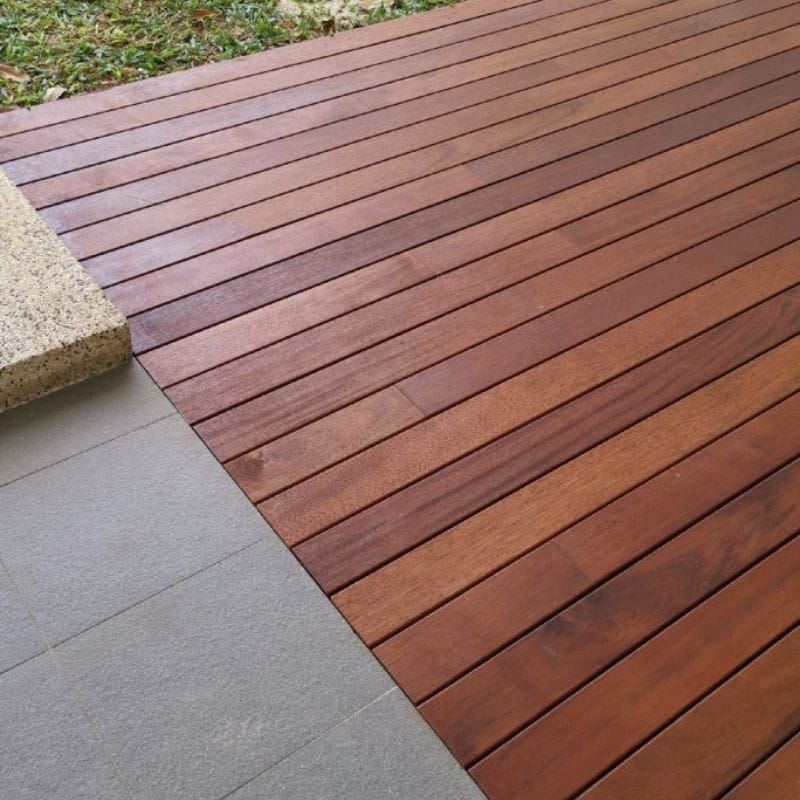
Choosing the right decking material can transform an outdoor space into a practical and inviting extension of your home. Whether you are designing a garden deck, a poolside relaxation area, a patio or a resort-style outdoor living space, Chengal decking is a natural timber option worth considering.
Chengal is a Malaysian heavy hardwood known for its strength, density and natural durability. Its ability to resist termite attack and fungal infestation makes it a popular consideration for outdoor timber applications, particularly in environments where the material must withstand regular exposure to changing weather conditions.
For Malaysian homeowners, architects, landscape designers and property developers, Chengal timber decking offers a combination of natural wood character and practical performance.
In this guide, we explore the benefits of Chengal decking, where it can be used, how to maintain it in Malaysia’s tropical climate and what to consider before selecting timber for your next outdoor project.
What Is Chengal Decking?
Chengal decking is outdoor flooring made from Chengal timber, scientifically known as Neobalanocarpus heimii. It is a Malaysian hardwood classified as a heavy hardwood by the Malaysian Timber Council.
Chengal heartwood typically begins as light yellow-brown with a greenish tinge before darkening with exposure to a deeper purple-brown or rust-red colour. Its fine, even texture and interlocked grain give the timber a distinctive natural appearance.
Chengal is also recognised for its high density, typically around 915–980 kg/m³ in the air-dry condition. Its strength and natural durability make it suitable for demanding applications, including decking, heavy construction and marine-related uses.
Unlike synthetic decking products designed to imitate timber, natural Chengal decking showcases the grain, texture and colour variations of real wood.
These characteristics make Chengal an option for outdoor spaces where the appearance of natural timber is an important part of the design.
Benefits of Chengal Decking
1. Natural Durability for Outdoor Applications
One of the main reasons to consider Chengal decking is its natural durability.
According to the Malaysian Timber Council, Chengal is normally very resistant to termite attack and fungal infestation. These characteristics make it suitable for applications where timber is exposed to outdoor environmental conditions.
However, natural durability does not mean the timber is completely immune to deterioration. Prolonged moisture exposure, poor drainage, unsuitable installation and inadequate maintenance can still affect the performance of a timber deck.
Proper material selection and construction remain essential for achieving a durable outdoor flooring installation.
2. Strength and High Density
Chengal is classified as a heavy hardwood with a high air-dry density. Its strength makes it suitable for demanding timber applications, including decking and heavy-duty construction.
For outdoor projects, it is important to select the correct board dimensions and supporting structure for the intended use.
Decking boards, joists, supports and fixings should be specified according to the installation design, loading requirements and site conditions. A qualified professional should assess elevated decks and other structures that require additional structural support.
3. Distinctive Natural Wood Appearance
Chengal decking brings the natural warmth and texture of timber into an outdoor environment.
Its colour can change as the wood is exposed to sunlight and weather. Depending on the finish and maintenance routine, the surface may retain more of its original brown tones or gradually develop a weathered, silvery-grey appearance.
This natural ageing process can complement contemporary architecture, tropical landscaping and traditional Malaysian homes.
Chengal decking can also be paired with stone, concrete, glass and metal to create contrast between natural and manufactured materials.
4. Suitable for Malaysia's Tropical Climate
Malaysia’s climate presents particular challenges for outdoor flooring. Decking must contend with high humidity, heavy rainfall, sunlight and repeated wetting and drying.
Chengal’s natural durability makes it a species worth considering for outdoor timber decking in Malaysia.
Nevertheless, the timber must be installed with appropriate drainage, ventilation and spacing. Water should not accumulate beneath the deck, and the supporting structure should be designed to manage moisture effectively.
The performance of a completed deck depends on more than the wood species alone. Proper detailing and installation are equally important.
5. Versatile Design Applications
Chengal decking can be used in various outdoor settings, from private residences to commercial projects.
Its natural grain and colour make it suitable for spaces that require a warm, organic finish without sacrificing a substantial hardwood appearance.
With appropriate specifications and installation, Chengal timber can help create outdoor environments that complement the surrounding architecture and landscape.
Where Can You Use Chengal Timber Decking?
The versatility of Chengal makes it worth considering for several types of outdoor projects.
Garden Decking
A Chengal timber deck can create a defined outdoor seating or relaxation area within a garden.
The natural wood finish works well alongside greenery, landscaping stones and outdoor furniture. It can also help connect a house with its surrounding garden.
For garden installations, ensure that the supporting structure and drainage arrangements prevent prolonged contact with damp soil.
Poolside Decking
Chengal decking may be considered for selected poolside applications when the design and installation account for regular water exposure.
Poolside decking requires particular attention to drainage, surface condition, slip resistance and maintenance. Natural timber is not automatically slip-proof, especially when wet, so the finish and detailing should be selected carefully.
Pool chemicals and standing water should also be managed according to the decking manufacturer’s recommendations.
Patio and Outdoor Living Areas
For homeowners who enjoy entertaining outdoors, Chengal decking can provide a natural surface for patios, seating areas and outdoor dining spaces.
It can complement covered terraces as well as partially exposed areas, provided the product and installation details are suitable for the level of weather exposure.
Covered decks may experience less direct rain and sunlight, although humidity and moisture can still affect the timber.
Balconies and Terraces
Chengal decking can be considered for suitable balconies and terraces where the structure can accommodate the additional load and the installation provides adequate drainage.
Before installation, check the property’s waterproofing, allowable loading, drainage outlets and any building management requirements.
For condominiums and high-rise properties, obtain the necessary approvals before modifying an existing balcony or terrace.
Resorts, Hotels and Commercial Landscapes
Chengal is also relevant to selected commercial outdoor environments, including resort terraces, landscaped walkways and outdoor hospitality areas.
These projects may experience heavier foot traffic and more demanding maintenance requirements than private residential decks.
The decking specification should therefore account for expected use, cleaning schedules, structural requirements and the availability of replacement boards.
Is Chengal Decking a Good Choice for Malaysian Weather?
Chengal can be a suitable option for outdoor decking in Malaysia because of its natural durability and resistance to termites and fungal infestation.
However, even a naturally durable hardwood requires proper installation and care.
There are four important considerations when planning Chengal decking for Malaysia’s tropical conditions.
Moisture management: Ensure the substructure allows water to drain away and air to circulate beneath the decking.
Board spacing: Appropriate gaps between boards help accommodate natural timber movement and allow rainwater to pass through.
Timber preparation: Ask your supplier about the timber’s moisture condition, preparation process and suitability for the intended exposure.
Surface maintenance: Select a suitable exterior finish if you want to preserve the timber’s original colour, and follow the recommended maintenance schedule.
These measures can help reduce avoidable problems such as water retention, excessive timber movement and premature deterioration.
Chengal Decking vs Merbau Decking
Chengal and Merbau are both tropical hardwoods used in Malaysian timber applications. However, they have different characteristics that may influence your selection.
Consideration | Chengal | Merbau |
|---|---|---|
Timber classification | Heavy hardwood | Hardwood with density varying by species and grade |
Appearance | Brown tones that may darken towards purple-brown or rust-red | Brown to dark reddish-brown |
Natural durability | High resistance to termites and fungal infestation | Also recognised for natural resistance to fungus and pests |
Common applications | Decking, heavy construction and other demanding uses | Decking, flooring, furniture and other timber applications |
Selection priorities | Strength, natural durability and timber character | Colour preference, application and overall project requirements |
The most suitable choice depends on the exact timber specification, board dimensions, site exposure, installation method and budget.
Rather than choosing based on species name alone, ask for product details and assess how the timber will perform in your intended application.
If you are comparing outdoor timber options, explore ATH’s solid wood decking and cladding solutions to learn more about its decking range.
How to Maintain Chengal Decking
Regular maintenance helps preserve the appearance and condition of a natural timber deck.
The required maintenance frequency depends on sunlight exposure, rainfall, foot traffic, the type of finish and the design of the supporting structure.
1. Clean the Deck Regularly
Remove leaves, dirt and other debris that can collect between decking boards.
Accumulated organic material can retain moisture and encourage surface staining. Use a suitable brush and cleaning method to avoid damaging the timber.
2. Keep Drainage Clear
Check that the gaps between decking boards remain clear and that water can drain away freely.
Inspect the area beneath the deck where accessible. Standing water, persistent dampness and blocked drainage should be addressed promptly.
3. Inspect the Timber and Supporting Structure
Periodically examine the decking boards, fixings, joists and supports for signs of deterioration.
Pay particular attention to loose boards, damaged fixings, excessive movement, soft areas and moisture accumulation.
For elevated decking, structural concerns should be assessed by a qualified professional.
4. Apply a Suitable Exterior Finish
If you want to preserve more of Chengal’s original colour, an exterior timber oil or suitable protective finish may help reduce weathering.
Choose a product designed for the intended timber and outdoor exposure. Follow the manufacturer’s instructions for surface preparation, application and recoating.
If you prefer the natural weathered appearance of aged timber, you may choose a different maintenance approach, but cleaning and structural inspections remain important.
5. Avoid Excessive Water Pressure
Use cleaning equipment appropriate for natural timber.
Excessive pressure can damage the surface fibres, especially if the nozzle is held too close to the wood. Follow the timber supplier’s recommended cleaning method.
A consistent maintenance routine can help keep the deck attractive and identify problems before they become more serious.
What Should You Consider Before Installing Chengal Decking?
Before purchasing Chengal decking, assess the practical requirements of your project.
Board Dimensions and Layout
The width, thickness and length of the decking boards influence the appearance and installation requirements.
Wider boards may create a more substantial visual effect, while narrower boards can produce a more detailed pattern. The dimensions must also be appropriate for the supporting structure and expected loading.
Installation Method
Decking can be installed using different fixing systems, depending on the product profile and project specification.
ATH’s decking range features the ATH Stainless Steel Decking Clip system, a nail-less installation approach designed to provide a clean finish.
Confirm whether the selected Chengal product is compatible with this system before specifying it for your project.
Substructure and Drainage
The supporting frame is just as important as the decking boards.
Ensure that the joists, supports and fixings are appropriate for outdoor use and that the design allows sufficient drainage and ventilation.
For elevated installations, structural design and safe load capacity should be professionally assessed.
Budget and Long-Term Maintenance
The total project cost depends on more than the timber price per board.
Consider the decking area, board dimensions, wastage, supporting structure, fixings, labour, surface preparation and finishing requirements.
It is also worth planning for future cleaning, inspections and protective treatments where required.
A suitable decking specification should balance appearance, performance, installation requirements and long-term ownership costs.
Why Consider Asia Timber House for Timber Decking?
Asia Timber House (ATH) supplies timber solutions for residential and commercial applications, including solid wood decking and cladding.
ATH’s decking range focuses on natural timber aesthetics, material quality and installation solutions designed to support a clean finished appearance.
Its ATH Duradeck system features a stainless steel decking clip system designed for nail-less installation. This approach can help create a more streamlined surface when used with compatible decking products.
When planning an outdoor timber project, the right material depends on your design, site conditions and performance requirements.
Discuss your intended application with the ATH team to confirm available timber species, product dimensions, installation compatibility and suitable maintenance requirements.
Explore the ATH solid wood decking and cladding range for more information.
Frequently Asked Questions About Chengal Decking
Is Chengal good for outdoor decking?
Chengal is a heavy hardwood with natural resistance to termite attack and fungal infestation. The Malaysian Timber Council lists decking among its recognised uses. Proper installation, drainage and maintenance are still necessary for outdoor performance.
Is Chengal decking suitable for Malaysia's climate?
Yes, Chengal is worth considering for outdoor decking in Malaysia because of its natural durability. Its suitability for a particular site depends on timber preparation, drainage, ventilation, weather exposure and installation quality.
Does Chengal decking require maintenance?
Yes. Natural timber decking should be cleaned and inspected regularly. Depending on exposure and the desired appearance, a suitable exterior protective finish may also need periodic reapplication.
Does Chengal decking change colour over time?
Yes. Chengal’s natural colour can darken with exposure, and outdoor weathering may gradually change its surface appearance. Sunlight, rain and the selected finish all influence how the timber ages.
Is Chengal decking termite-resistant?
Chengal is classified as naturally durable and is normally very resistant to termite attack, according to the Malaysian Timber Council. This does not mean it is completely immune to every form of pest damage or that the surrounding structure requires no inspection.
Is Chengal decking suitable for poolside areas?
It can be considered for suitable poolside applications, but the design must address drainage, wet-surface slip resistance, pool chemical exposure and maintenance. Product suitability should be confirmed before installation.
What is the difference between Chengal and Merbau decking?
Both are tropical hardwood options, but they differ in appearance and timber characteristics. Chengal is known for its high density and natural durability, while Merbau is often selected for its brown to dark reddish-brown colour. Compare the actual product specifications and project requirements before deciding.
How long does Chengal decking last?
There is no single lifespan that applies to every Chengal deck. Service life depends on the timber quality, installation, drainage, structural design, weather exposure and maintenance. Ask your supplier for guidance based on the specific product and intended use.
Find the Right Timber Decking for Your Project
Chengal decking offers a combination of natural timber beauty, high density and recognised durability for outdoor applications. From garden decks and patios to selected commercial landscapes, it can be a practical option for projects that value the appearance and character of real wood.
The best results come from choosing suitable timber, preparing the site properly and planning for drainage, installation and ongoing maintenance.
If you are considering Chengal decking or comparing timber options for your next project, Asia Timber House can help you explore suitable decking solutions.
Contact Asia Timber House to discuss your timber decking requirements and request further product information.
Visit ATH’s solid wood decking and cladding page or contact the ATH team to discuss your project.